
Injured on a New York Construction Site? Workers' Comp Is Not Your Only Option.
If you were hurt on a job site in Nassau or Suffolk County, you may have rights that go far beyond what workers' compensation pays — and the contractors and property owners responsible may be directly liable under New York law.
New York's Scaffold Law Gives Injured Workers Unusually Strong Protection
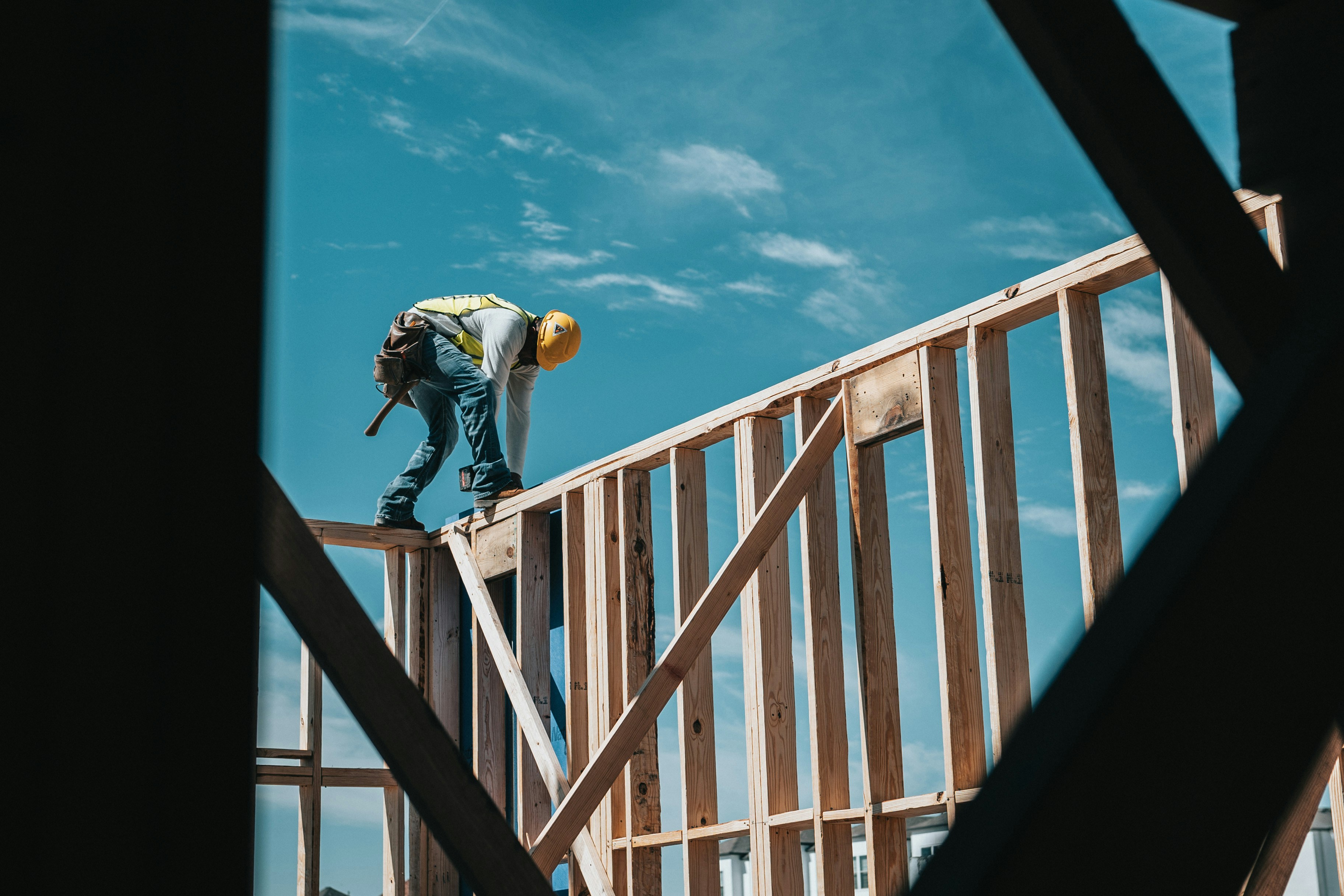
New York's Labor Law §240 — known as the Scaffold Law — is one of the most powerful worker-protection statutes in the country. It places absolute liability on property owners and general contractors for elevation-related injuries: falls from scaffolding, ladders, roofs, and elevated platforms, as well as injuries caused by falling objects on a construction site. That word "absolute" matters. Under §240, the owner and GC cannot shift blame to the injured worker to escape liability. If you were hurt in an elevation-related accident on a New York job site, the law is structured to hold the people in control of that site responsible — regardless of how the accident happened.
Labor Law §241 extends similar protections to a broader range of construction site injuries, requiring owners and contractors to maintain safe working conditions throughout the project. Together, these statutes form the legal foundation for most construction accident claims in New York, and they are unique to this state.
Workers' Comp Is the Floor — Not the Ceiling
Most injured construction workers know they can file a workers' compensation claim. What many don't know is that workers' comp is not the end of the road. It is the minimum, not the maximum.
Workers' compensation covers a portion of lost wages and medical bills, but it does not compensate you for pain and suffering, and the benefits are capped. A Labor Law claim against the property owner or general contractor is a separate legal action — one you can pursue in addition to your workers' comp claim, not instead of it. These are independent remedies, and pursuing one does not forfeit the other.
If your injury happened on a Long Island construction site — a residential renovation in Nassau County, a commercial build-out in Suffolk, or any project where a contractor or property owner controlled site conditions — there may be a third-party claim available to you that your employer's insurance carrier has no interest in telling you about.
Construction Accidents Covered Under New York Labor Law
New York's Labor Law §§240 and 241 apply to a wide range of job site injuries. The most common scenarios I handle include:
- Scaffold collapses and scaffold falls
- Ladder falls, including defective or improperly secured ladders
- Falls from roofs, elevated platforms, or open floor openings
- Injuries from falling tools, materials, or equipment
- Trench collapses and excavation accidents
- Construction equipment accidents involving cranes, forklifts, and hoisting equipment
- Injuries caused by inadequate safety equipment or failure to provide required fall protection
If your injury involved an elevation hazard — either you fell, or something fell on you — there is a strong basis to evaluate a Labor Law §240 claim. Other site accidents may fall under §241 or general negligence theories depending on the circumstances.
"The Fall Was Partly My Fault — Do I Still Have a Case?"
This is one of the most common concerns I hear from injured construction workers, and the answer under New York law may surprise you.
For Labor Law §240 claims, comparative fault is generally not a defense available to the property owner or general contractor. The statute imposes absolute liability for elevation-related hazards. That means the owner and GC cannot reduce or eliminate their responsibility by arguing that you were careless, that you ignored a warning, or that you could have done something differently. The law asks whose site it was and whether the proper protections were in place — not how the worker contributed to the accident.
This does not mean every claim is automatic or that the facts don't matter. But it does mean that workers who assume they have no case because of their own role in the accident are often wrong. The right step is to have the facts reviewed by an attorney who knows how these statutes are applied in New York courts.
Undocumented Workers Have the Same Rights Under Labor Law
New York's Labor Law §§240 and 241 protect all workers on covered construction sites — regardless of immigration status. Undocumented workers are entitled to bring Labor Law claims against property owners and general contractors the same as any other worker. The law does not condition these rights on documentation, work authorization, or how you were paid.
I understand that fear of exposure is real, and I take that concern seriously. But your right to pursue a claim for a serious injury is protected under New York law, and exercising that right does not require you to put your status at risk. If you were hurt on a Long Island job site and are unsure whether this applies to you, I encourage you to call and have a confidential conversation before making any decisions.
Related Practice Areas
Retaliation Is Unlawful — Your Rights Don't Cost You Your Trade
Some workers hesitate to pursue a claim because they are afraid of being blacklisted from future job sites or losing their standing with a contractor. That fear is understandable, but it is worth understanding what a Labor Law claim actually targets.
Labor Law §§240 and 241 claims are brought against property owners and general contractors — not against your co-workers, your foreman, or your trade union. These are civil claims against the parties who controlled the site and had the legal obligation to maintain safe conditions. Retaliation against a worker for exercising legal rights is itself unlawful under New York law. The system is not designed to punish workers for getting hurt — it is designed to hold the people at the top of the construction chain accountable.
Why Long Island Construction Accident Claims Require Local Knowledge
Nassau and Suffolk counties have seen sustained residential and commercial construction activity for years — new developments, large-scale renovations, infrastructure projects, and mixed-use builds across both counties. With that volume of work comes a significant number of job site injuries, and the legal landscape for pursuing those claims requires specific familiarity with New York's Labor Law framework and how it is applied in Nassau and Suffolk courts.
I have been practicing personal injury law on Long Island for more than 35 years. I know the courts, I know the statutes, and I know how to build a construction accident claim that accounts for the full scope of what you are owed — not just the workers' comp floor that your employer's carrier is hoping you'll accept.
Frequently Asked Questions About New York Construction Accident Claims
What is Labor Law §240 in New York?
Labor Law §240 — often called the Scaffold Law — is a New York statute that holds property owners and general contractors absolutely liable for elevation-related injuries on construction sites. If a worker falls from a scaffold, ladder, roof, or elevated platform, or is struck by a falling object, the owner and GC are liable regardless of whether the worker contributed to the accident. It is one of the strongest worker-protection laws in the country and is unique to New York.Can I sue if I was hurt on a construction site on Long Island?
Yes. If your injury involved an elevation hazard or unsafe site conditions, you may have a Labor Law claim against the property owner and general contractor in addition to any workers' compensation benefits. These are separate claims. A workers' comp filing does not prevent you from pursuing a third-party lawsuit, and a third-party recovery does not eliminate your workers' comp benefits.How is a Labor Law claim different from workers' compensation?
Workers' compensation covers a portion of lost wages and medical costs but does not compensate for pain and suffering, and the benefits are capped. A Labor Law claim is a civil lawsuit against the owner and contractor — separate from workers' comp — that can recover for pain and suffering, full lost earnings, and other damages that workers' comp does not reach. You can pursue both at the same time.Does my immigration status affect my right to file a construction accident claim?
No. New York's Labor Law §§240 and 241 protect all workers on covered construction sites regardless of immigration status or documentation. Your right to bring a claim for a serious job site injury is protected under state law. I handle these consultations with full confidentiality.How long do I have to file a construction accident claim in New York?
The statute of limitations for a Labor Law personal injury claim in New York is generally three years from the date of the accident. However, if a municipality or public entity owns the construction site, much shorter notice requirements may apply — sometimes as little as 90 days. It is important to speak with an attorney as soon as possible after a job site injury to preserve your rights.
Talk to a Long Island Construction Accident Lawyer — Free Case Review
If you or someone you know was injured on a construction site in Nassau or Suffolk County, the most important thing you can do right now is get accurate information about what your claim is actually worth. Workers' comp is not the whole answer. A free case review costs you nothing and could change what you recover significantly.
I have been handling personal injury claims on Long Island for more than 35 years. I will review the facts of your accident, explain exactly what Labor Law protections may apply, and give you an honest assessment of your options — with no pressure and no obligation.
Attorney advertising. Prior results do not guarantee a similar outcome. The information on this page is for general informational purposes and does not constitute legal advice. Contacting this office does not create an attorney-client relationship.